

14 May 2013
How to escape a landslide
Various news reports suggest that a couple in Alaska had a very lucky escape from a landslide on Sunday. The best news report that I have come across is on Alaska Public Media, which also has this image of the landslide (credited to Kevin Knox):
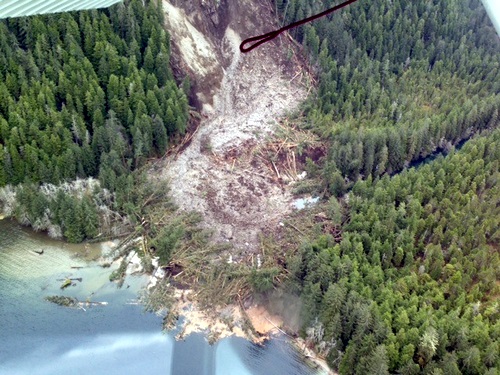
Alaska Public Radio / Kevin Knox
Kevin Knox and Maggie Gallin were staying at Redoubt Lake Cabin in Alaska when, in Kevin’s words:
“We had just tied the boat up and Maggie was in the cabin, and it just let loose — a huge piece off of the side of the mountain. I yelled for Maggie to run, to get out of the cabin. We started running down the beach.”
“We were running along the lakeshore and got thrown into the water, trees kind of toppling on top of us. We both popped up three or four feet from each other. Then we got our wits about us and just tried to hunker down.”
Interestingly, the report indicates that they saw precursory rockfalls the evening before. The couple were extremely luck to escape the landslide; sadly it appears that their dog was killed. The couple were rescued by floatplane a few hours after the landslide.
The website of the former cabin suggests that it would have offered little protection from a landslide. This is a Google Earth perspective view of the slope that failed:
 ..
..
There are few if any obvious signs of instability on the image. From the photo the left side of the landslide appears to be a wedge failure in bedrock; this in turn has destabilised regolith / colluvium on the right side.
It is quite rare to outrun a landslide in the way that these people have; they are exceptionally fortunate.
13 May 2013
A very dangerous reservoir bank landslide in China
 In a technical note that was recently published in the journal Landslides, Zhang et al. (2013) have highlighted a very interesting landslide that is developing on the flanks of the resevoir associated with the Laxiwa Hydropower Station in China. This HEP station consists of the Laxiwa Dam, a very large concrete arch dam in Qinghai Province on the Yellow River, which was commissioned in 2009, and associated reservoir and infrastructure. Construction of the dam has not been completed, but once it is finished it will be 250 m high with a storage capacity of about one cubic kilometre of water.
Large landslides on reservoir banks are a highly sensitive issue. In 1963 a very large landslide into the Vajont reservoir in northern Italy killed about 2500 people; subsequently, dam builders have taken great measures to avoid a repeat of such a problem. Fortunately, despite very large-scale dam construction over the last 50 years, there has been no large-scale recurrence of the Vajont tragedy. This may well be a combination of good management and a certain amount of luck; many people feel that with the current boom in the construction of large dams we may be pushing this luck to the limit.
The landslide that Zhang et al. (2013) lies on the flanks of the Laxiwa reservoir, a little way upstream of the dam. The dam itself is readily visible on Google Earth – put 36.071667, 101.18722 into the search location and it will take you there. The landslide is on the south bank about 500 m upstream of the dam – go to 36.0954, 101.185. The slope started to move soon after impoundment was initiative – the Google earth image of late 2010 shows very substantial levels of movement across the newly formed rear scarp:
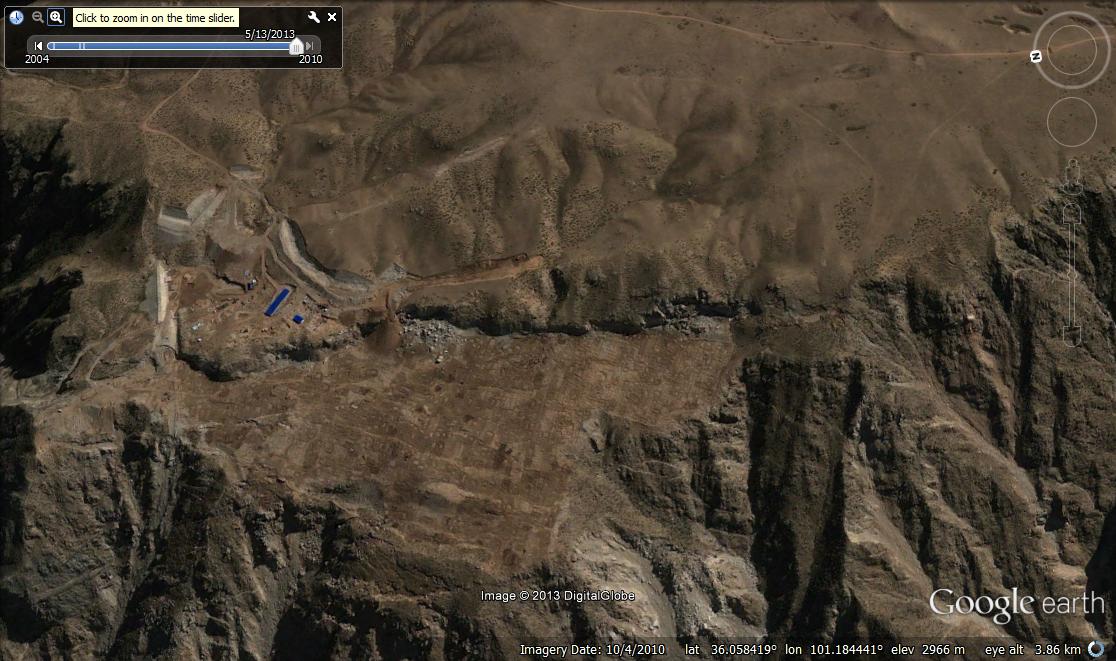 ..
..
The sits at the top of the mass that is moving – the unstable block is shown below:
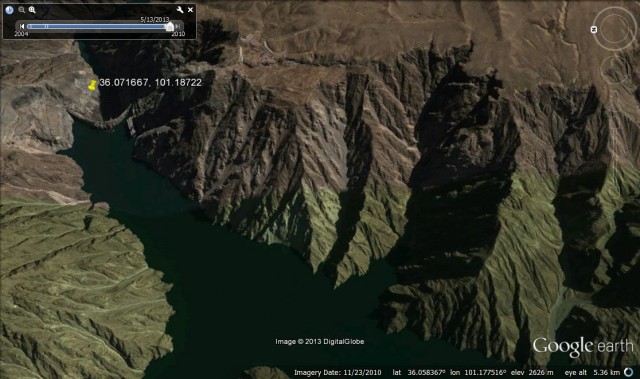 ..
..
An intial visual inspection of this site rings alarm bells – the landslide is very large, the terrain is steep, and the proximity to the dam means that the wave would not attenuate substantially before reaching the dam. This becomes even more alarming when the detail from the paper is examined. In March 2010 the scarp was about 20 metres high, seven months later it had extended by a further 7 m. Detailed investigations are ongoing, but at the time of writing the slip surface had not been identified. Nonetheless, the estimated volume is about 120 -150 million cubic metres. The study used InSAR data to look at the slope – before impoundment the data suggest that the slope was not moving.
This slope is at best deeply worrying. It is hard to predict future behaviour without much more detailed analyses, but a catastrophic collapse cannot be ruled out. As the paper states:
“Although the precision in the estimation of the landslide volume and the wave height needs to be specified, the possible damage to the dam as well as to the downstream area could be devastating.”
Reference
Zhang, D., Wang, G., Yang, T., Zhang, M., Chen, S., & Zhang, F. (2012). Satellite remote sensing-based detection of the deformation of a reservoir bank slope in Laxiwa Hydropower Station, China Landslides, 10 (2), 231-238 DOI: 10.1007/s10346-012-0378-9
12 May 2013
The Wenchuan earthquake, five years on

..
Five years ago today, on 12th May 2008, Sichuan Province was struck by the devastating M=7.9 Wenchuan earthquake. This earthquake was the landslide event of a generation, with over 60,000 slides being triggered, causing over 20,000 of the 80,000 fatalities. In the aftermath of the earthquake the army fought a desperate battle to drain the barrier lake at Tangjiashan, which threatened a million people.
Today I am in Chengdu attending a conference to mark the anniversary of the earthquake. The meeting, organised by the Chengdu University of Technology, aims to share information about earthquake-induced landslides. Meanwhile, the Chair of the conference, Professor Runqiu Huang, has written a really nice article in the current edition of Nature Geoscience (Huang and Fan 2013) about the landslides triggered by the earthquake. Unfortunately it is behind a paywall. Part of the paper reflects upon the unexpected or unanticipated dimensions of the landslide problem. Three key themes emerge:
- “Not enough attention was paid to the cascade of geohazards following the earthquake”. The paper argues that, in particular, the barrier lakes caused a huge problem, which drained resources from the emergency effort.
- “The longer-term effects of a similar cascade of potential hazards were not fully taken into account in the post-seismic hazard assessment and in the selection of sites for the reconstruction of destroyed buildings”. In the aftermath of the earthquake newly-constructed towns were flooded when post-seismic debris flows blocked rivers. Elevated levels of landslide activity are expected to persist for anothertwo decades.
- “The long-term impact of the 2008 Wenchuan earthquake on sediment flux in the affected watersheds was also underestimated initially”. The ways that rivers respond to the additional sediment load produced by the earthquake are complex, but very often the bed aggrades, leading to floods. This means that the effects of the earthquake can extend beyond the area affected by shaking.
In coming years we will see further earthquakes in mountain areas, with similar effects. We have gained a huge amount of knowledge from Wenchuan, albeit at a terribly high cost in human lives. I wonder though whether our improved knowledge is really leading to better preparedness for the next big event.
Reference
Huang, R., & Fan, X. (2013). The landslide story Nature Geoscience, 6 (5), 325-326 DOI: 10.1038/ngeo1806
11 May 2013
First news of a costly landslide in Mizoram, India
Various news reports are emerging of a substantial landslide in Laipuitland, Mizoram, in the far east of India. The Hindu reports that eight people have been confirmed as having been killed, a further 11 are missing and that nine people were injured. The trigger appears to have been a thunderstorm.
More information should emerge in the next 24 hours.
6 May 2013
Analysing the Bingham Canyon mine landslide part 2: the landslide track
This is part two of a three-part series looking at the Gingham Canyon mine landslide. Part 1 is here.
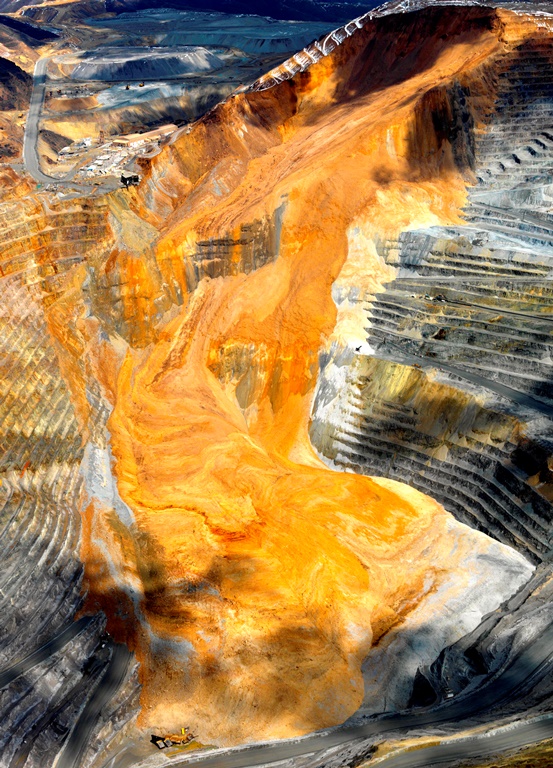
The best overview image of the track of the landslide is this one (used with permission courtesy of the Kennecott Utah flickr site
..
Unfortunately, the images of the slope before the landslide were taken from a slightly different angle, but they are very useful as a reference point:
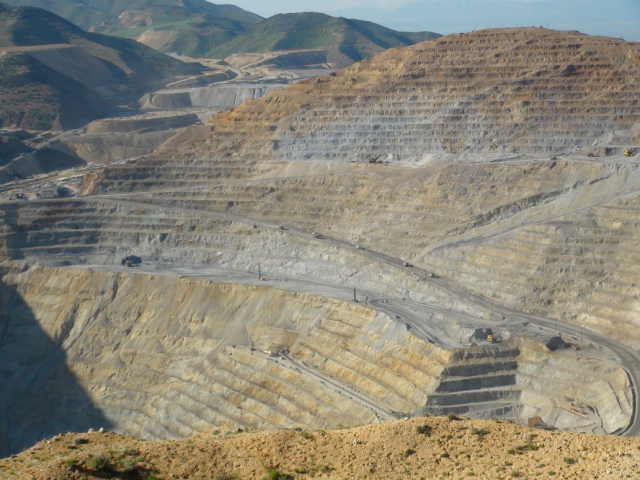
http://www.flickr.com/photos/riotinto-kennecottutahcopper/8644405220/in/photostream
..
The first thing to note is that the block that failed does not extend to the floor of the mine – in fact it toes out about half way up the slope. The landslide has run across the lower slope without inducing any major failure in this area. So, on the lower slope it is still possible to see the remains of the mining benches, although they have been eroded from the passage of the landslide:
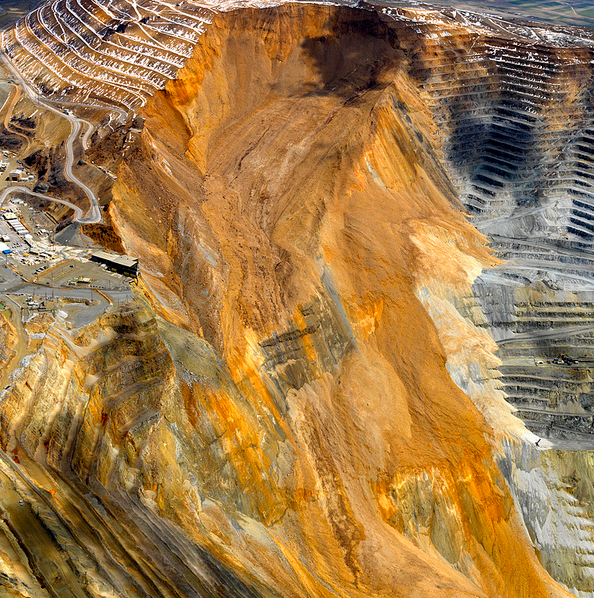
http://www.flickr.com/photos/riotinto-kennecottutahcopper/8644405220/in/photostream
..
The unusual orientation of the shear surface is clear from the image below, also from Kennecott Utah. The mine manager (see end of this post) explained that the failure occurred in a thin sedimentary band within the quartzites.
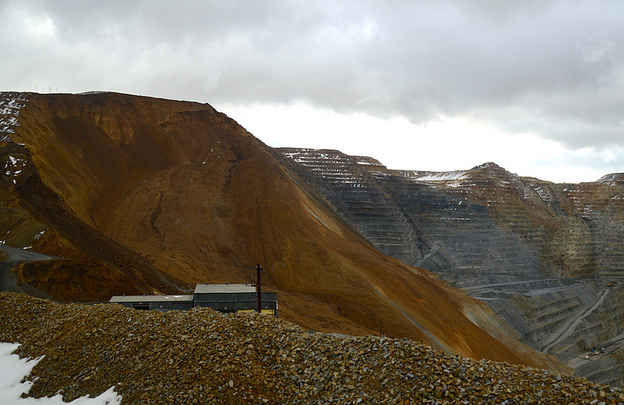
http://www.flickr.com/photos/riotinto-kennecottutahcopper/8639731985/in/photostream
..
Note how the sliding surface, which is formed from an existing plane of weakness, is orientated towards the camera rather than into the pit. This would have made release of the landslide much more kinematically difficult. This might imply that the first landslide was a wedge failure in the lower part of the slide area, which then released the block moving on this comparatively unfavourable slide plane. Analysis of the radar data would be very interesting in order to understand this. Most of the debris followed a track that was defined by this basal sliding plane before in effect free-falling to the floor of the mine and spreading out:
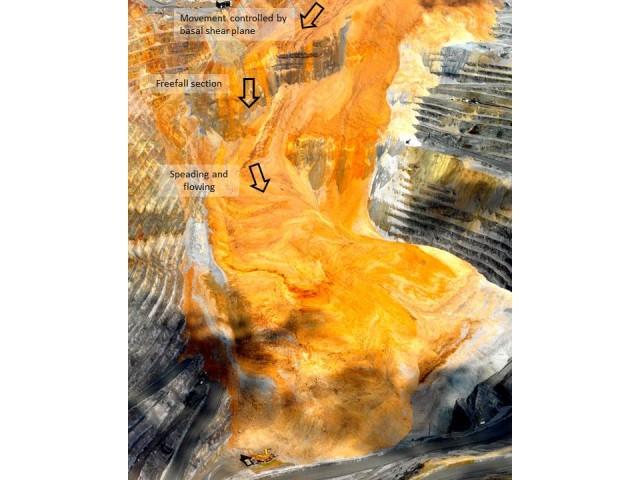
http://www.flickr.com/photos/riotinto-kennecottutahcopper/8643310015/sizes/o/in/set-72157633216160914/
..
Another interesting aspect of this slide is the way that some material has flowed over the lateral boundary of the landslide:
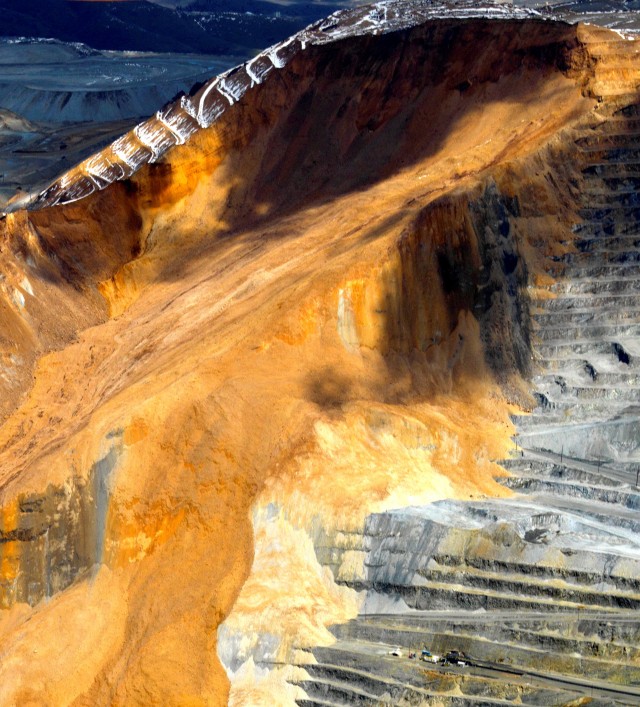
http://www.flickr.com/photos/riotinto-kennecottutahcopper/8643310015/sizes/o/in/set-72157633216160914/
..
The obvious interpretation of this is that it is late movement of debris, but the images that show the slide surface well do not suggest that this is the case:
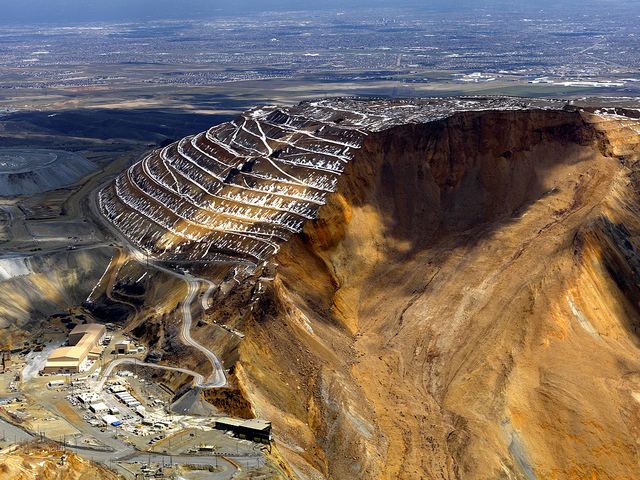
http://www.flickr.com/photos/riotinto-kennecottutahcopper/8644406138/sizes/z/in/photostream/
..
So it is likely that this is material that broke of the side of the main slide blocks during their movement and then followed the fall line.
Finally, Lee Allison from the Arizona Geological Survey has a video interview with Ted Himebaugh, general manager of the mine about the landslide:
http://www.youtube.com/watch?v=ohAa1svJGSo
..
The intreview starts 18 minutes into the film. There are two really interesting points here:
1. He noted that the movement started about two and a half months ago.
2. They did not expect that the movement would extend to the pit bottom. The latter is perhaps slightly surprising given that he says that they identified correctly the volume that was moving.
He correctly notes that the most important aspect of this was that the safety system performed perfectly. This is a good demonstration that it is possible to manage even these very large pits very safely.
1 May 2013
We are recruiting a post-doctoral researcher to work on earthquake-induced landslides
 ..
..
My colleague Professor Alex Densmore and I are currently recruiting a Post-Doctoral researcher to work with us on a project on earthquake-induced landslides. This post, which will start on 1st October 2013, is a two month position that is part of the consortium team on the ‘Earthquakes Without Frontiers’ project, funded by the NERC-ESRC Increasing Resilience to Natural Hazards Programme. The aim of the project is to increase resilience to continental earthquakes across the Alpine-Himalayan mountain chain, through a linked trans-disciplinary partnership of physical scientists, social scientists, policy specialists, and regional and national partner organisations. The overall project involves:
- Characterisation of the physical earthquake hazard across the region, including better understanding of the locations of active faults and strain accumulation, as well as better assessment of the likely locations, extent, and long-term impacts of secondary hazards such as landsliding;
- Assessment of pathways to resilience in the partner countries, including a full mapping of the societal, cultural, economic, and governance factors that enhance or erode resilience along with an understanding of existing efforts to build resilience and the ways in which that information has been used;
- Development of effective policy and strategies for intervention to increase resilience to future damaging earthquakes.
This new post will contribute primarily to aspect (i), and will focus in particular on delivering an enhanced understanding of coseismic landsliding, and of new web-based forecasting tools for end-users. This work will comprise two separate strands:
1. Development of a process-based approach to the forecasting of coseismic landslides that improves upon current empirical approaches; and
2. Construction of a novel tool for tracking the temporal evolution of landslide material.
The work will be focused on three primary field areas: Nepal and northern India; southern Kazakhstan; and central China. The post-holder will be based in the Department of Geography, Durham University, but will be expected to work closely with team members at the other institutions within the consortium (Cambridge, Oxford, Leeds, Hull, Northumbria, the British Geological Survey, and the Overseas Development Institute), as well as with wider members of the partnership.
Full details of the post are available on the Durham University jobs website: http://www.dur.ac.uk/jobs/ or please feel free to email me at: [email protected]
30 April 2013
Analysing the Bingham Canyon mine landslide part 1: the landslide source area
The Bingham Canyon mine landslide of a few weeks ago is an unusual mass movement. Kennecott Utah have put a set of very high resolution images on their flickr site and have provided permission for me to use them here (with due acknowledgement to them). I thought it would be interesting to take a little time to examine this landslide in more detail. There is a great deal to discuss here, so I am going to break this down into three posts over the next few days.
So lets start by looking at the site from a Google Earth image. This is a vast mine – the excavation is 970 m deep for example:
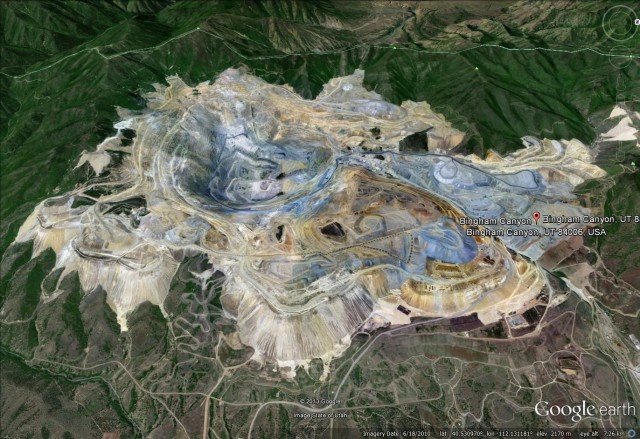
This image shows the slope that failed before the collapse event. Note the machinery on the haul road for scale:
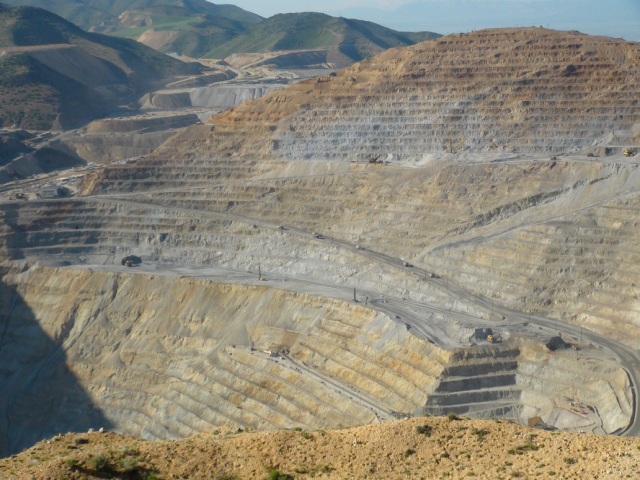
copyright Kennecott Utah - used with permission
.
The landslide source area
This Kenncott Utah image shows the source area very clearly:
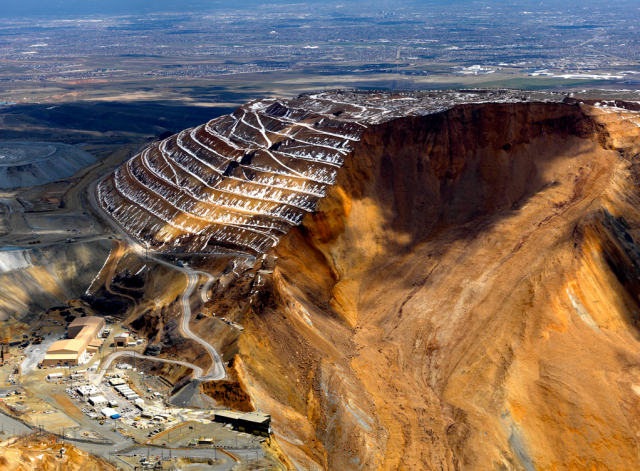
Copyright Kennecott Utah - used with permission
.
There are a couple of really interesting aspects of this. First, the headscarp has an unusual structure – I have annotated this as point 1 in the image below. This layering looks like a sedimentary structure. I wonder if this might be waste material that has been dumped on the slope? If you compare this with the before image above though this looks to be just a small portion of the headscarp, so was probably not a key factor in the failure event.
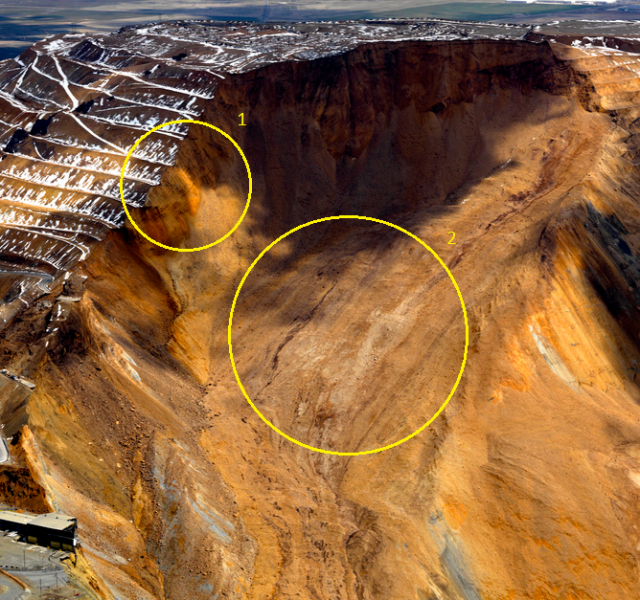
Copyright Kennecott Utah - used with permission
.
Second, the base of the landslide (2 in the photograph) is a comparatively planar surface. This would suggest a pre-existing weakness of some sort – maybe a fault? The orientation of this surface would have made the kinematics of failure quite interesting. The landslide could not initially more down dip because of the constraint from the valley wall, such that it would have had to travel slightly along strike, making this a sort of hybrid wedge failure. This structure could provide a hypothesis for the two recorded failure events – the first was a detachment of a lower block, which then released the upper block. This is shown quite nicely from a zoom is on the upper portion of the landslide from the fabulous overview image:

copyright Kennecott Utah - used with permission
..
It is clear from this that the trajectory of the landslide was controlled by this basal structure. However, a comparatively small amount of material spilled over the lateral boundary as well.
In the next post I’ll take a look at the evidence for the way that the landslide moved, whilst the final one will look at the deposit.
27 April 2013
Landslide hazards in the aftermath of the Lushan earthquake in Sichuan
A number of Chinese media outlets have articles about the threats posed by landslides in the aftermath of the 20th May 2013 Lushan earthquake in Sichuan Province. It is clear from the imagery (such as the image below) that landslides have represented a very significant component of the costs of this earthquake, although at present it is not clear just how many of the deaths were caused by mass movements. The next major threat is the upcoming rainy season – just weeks away – which will inevitably cause a combination of further first time failures and debris flows of released materials. Ya’an, the County in which Lushan sits, is nicknamed “the city of rain”.
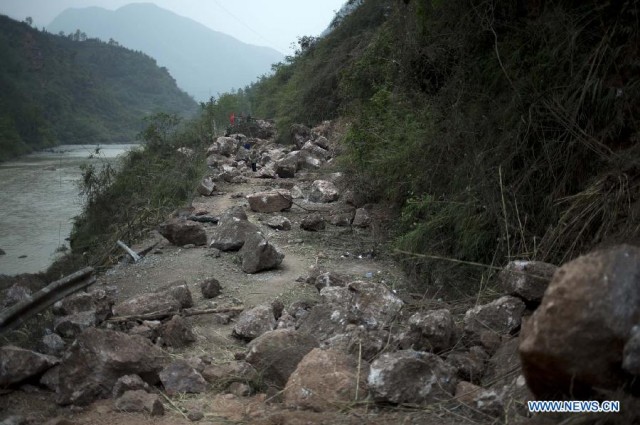
http://english.cntv.cn/20130422/102663_2.shtml
..
In terms of costs, Xinhua are reporting 196 fatalities, 21 people missing and 13,484 injured. The level of damage is very high – 86,300 buildings have collapsed in the quake and about 430,000 houses have been seriously damaged.
Eastday China reports that a team of 400 geohazards specialists are working to identify hazards, and are developing warning and evacuation plans. Emphasis is rightly being placed on the emergency camps, which are often extremely vulnerable. Meanwhile CRI English has an interesting report about landslides that have been deposited into river channels. Whilst these are not valley blocking at present, the loss of flow capacity may allow a lake to develop during the high flow period. Clearly this is unacceptably dangerous. The army are undertaking controlled blasting to clear the blockage.
26 April 2013
An update on the Bingham Canyon mine landslide
Kennecott held a press conference yesterday to provide an update on the situation with the Bingham Canyon mine landslide. This is well reported in a number of online newspapers, including Deseret News and ABC News. The openness and transparency of the mine operators in light of this situation remains both admirable and commendable. The nature of the challenges that the operators face in digging out the landslide are notable however. To my mind the most important components of the media briefing were:
- The upper part of the slide will have to be removed to make mining safe;
- The majority of the ore lies under the slide
- The landslide mass is 150 million tonnes (which is about 60 million cubic metres).
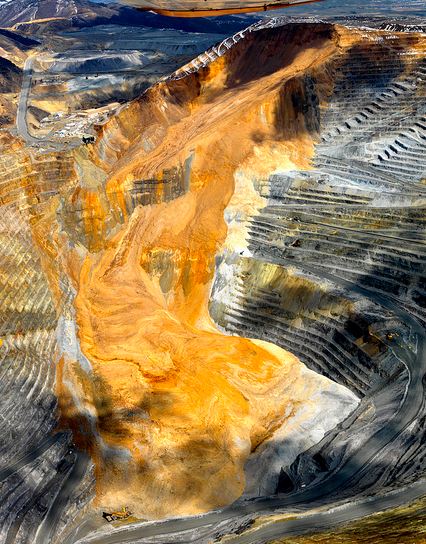
The largest mining dump trucks can carry about 350-400 tonnes per load, which means that there hauling even a fraction of the landslide mass is going to be a major challenge. A very interesting aspect of this is going to be how the head scarp area of the landslide is to be treated, as shown on the image below (from the Kennecott Utah Flickr page, used with permission):
http://www.flickr.com/photos/riotinto-kennecottutahcopper/8643310015/in/photostream
The obvious mass that needs to be removed is in the floor of the mine, but it is possible that some of the mass in the head scarp area is also potentially unstable. If so, this may need to be stabilised first. This is not a trivial job in itself.
The mine gave members of the media the opportunity to visit the site yesterday. I am somewhat jealous as I would love to see this remarkable landslide!
23 April 2013
New landslide videos and resources
In the last few days a number of new landslide videos and resources have been brought to my attention:
1. David Shilston gives a lecture on landslides
..
2. A nice blog post on landslides in western Washington
The Cliff Mass blog has a really nice post up about why there were so many landslides in Western Washington state this year. Thanks to Candice Hanson for pointing this one out.
..
3. An avalanche video from France
I don’t usually feature snow avalanches, but this one is very spectacular and seems to have shifted a large amount of soil:
 Dave Petley is the Vice-Chancellor of the University of Hull in the United Kingdom. His blog provides commentary and analysis of landslide events occurring worldwide, including the landslides themselves, latest research, and conferences and meetings.
Recent Comments