

28 January 2010
Earthquake-driven coastal erosion (or a coastal lateral spread) in Haiti
Posted by Dave Petley
The Discovery Channel has news of a very interesting example of rapid coastal erosion driven by the earthquake in Haiti. The site is at Petit Paradis to the west of Port-au-Prince. Eye-witness reports suggest that the town was struck by a highly localised tsunami in the earthquake, apparently killing 20. This is interesting in part because it is quite likely such a localised event would have been caused by a (submarine?) landslide – not at all unusual in earthquakes. However, the before and after satellite images show the magnitude of the changes on the coastline in this area.
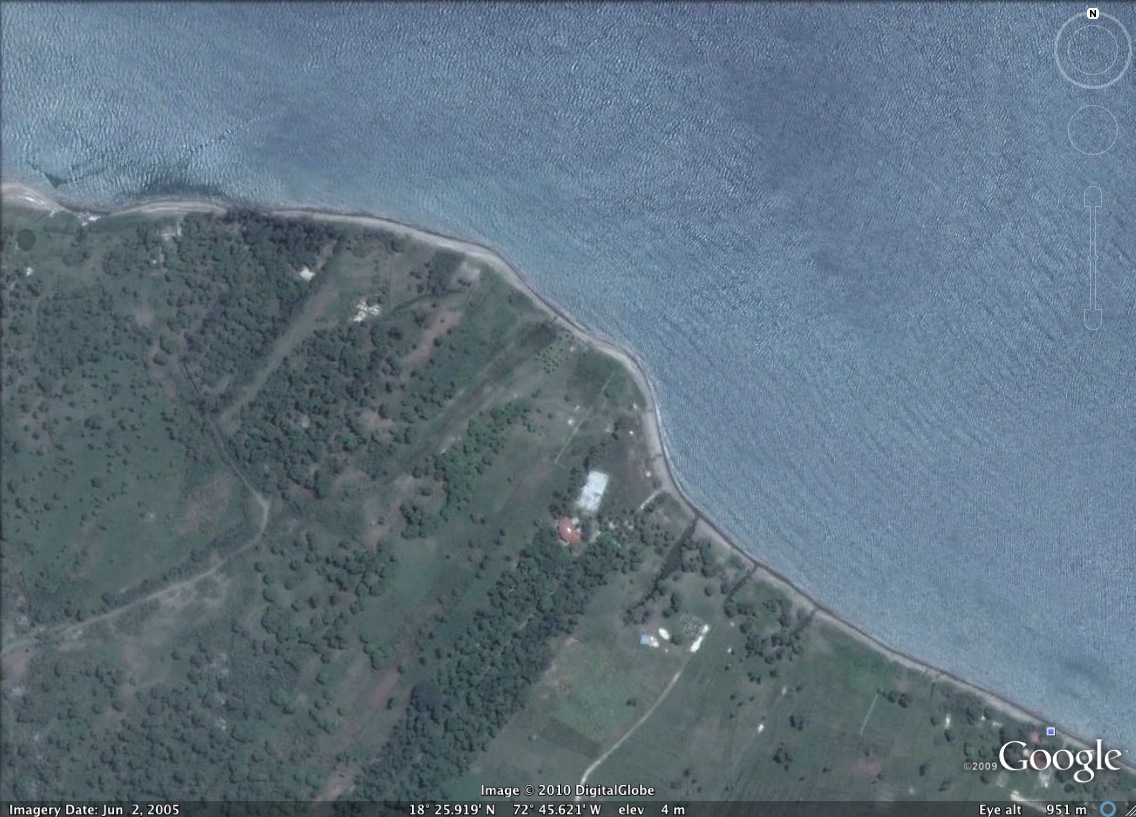
And after:

At first glance the change does not look so dramatic, but take a look at the location of the coastline in the before image in relation to the white building that I have highlighted below:
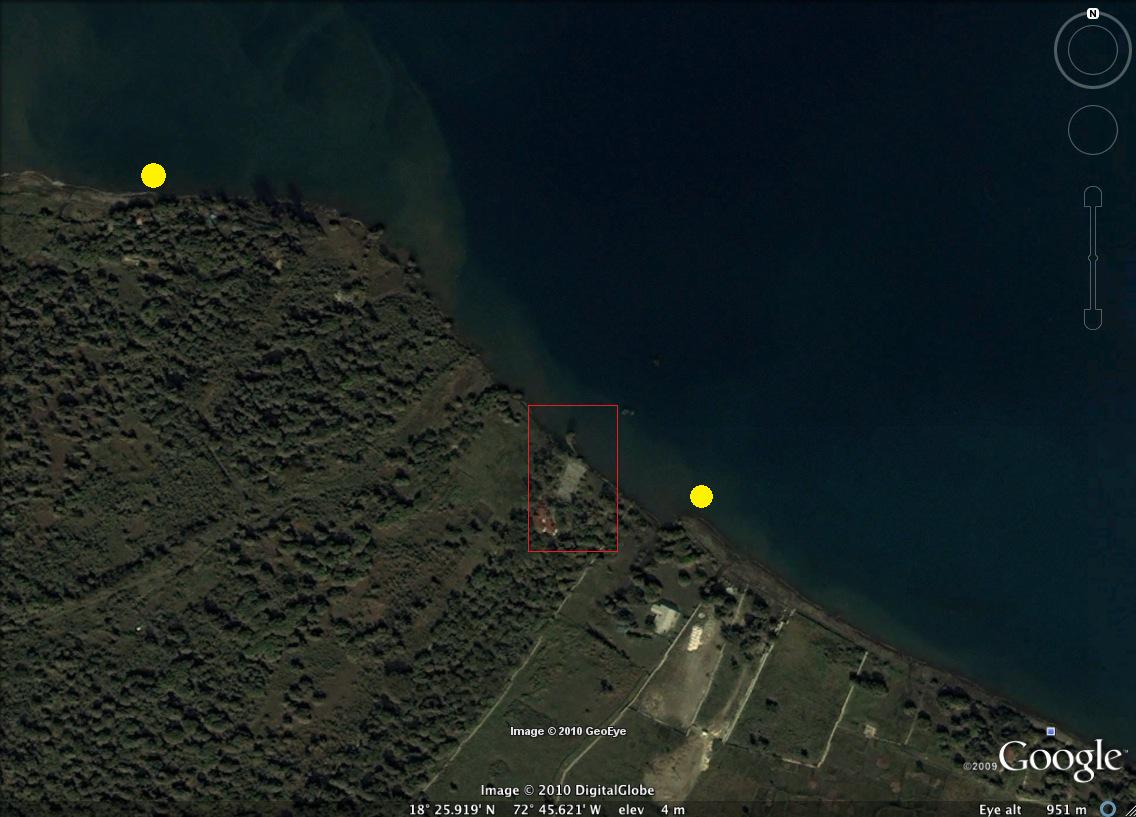
Actually, it is a little more interesting than you might initial suppose. First, note that the section of coast that has “disappeared” lies only between the two yellow dots that I have marked on the image above. To the east and the west the beach is intact. Second, take a look at this CNN video:
http://i.cdn.turner.com/cnn/.element/apps/cvp/3.0/swf/cnn_416x234_embed.swf?context=embed_edition&videoId=world/2010/01/23/watson.paradise.lost.cnn
The key aspect is the picture of that lone tree standing upright in the ocean. A USGS report has suggested this is the site of a lateral spread (the same type of landslide that is evident in the port area of Port-au-Prince), which has caused the coastline to slip into the sea. As lateral spreads are essentially translational, a tree can remain upright. Unfortunately, as the coastline is now no longer protected by a beach, further erosion is likely. An interesting hypothesis is of course that this not-insubstantial slip caused the localised tsunami – or could it be that there was no wave at all, just the appearance of one to those people standing on the land as it slipped below the waves?
 Dave Petley is the Vice-Chancellor of the University of Hull in the United Kingdom. His blog provides commentary and analysis of landslide events occurring worldwide, including the landslides themselves, latest research, and conferences and meetings.
The eye-witness reports from a wave "higher than the tree". This sounds like a real tsunami, but if that's right, the tree shouldn't be there anymore, I guess. At 0:54, they show a picture from a small boat in the streets, but this could be a stock image or the boat could have been moved for repair. No clear hints from the video, one needs to go there.
suck